
By Andrew Furman, author of Of Slash Pines and Manatees: A Highly Selective Field Guide to My Suburban Wilderness

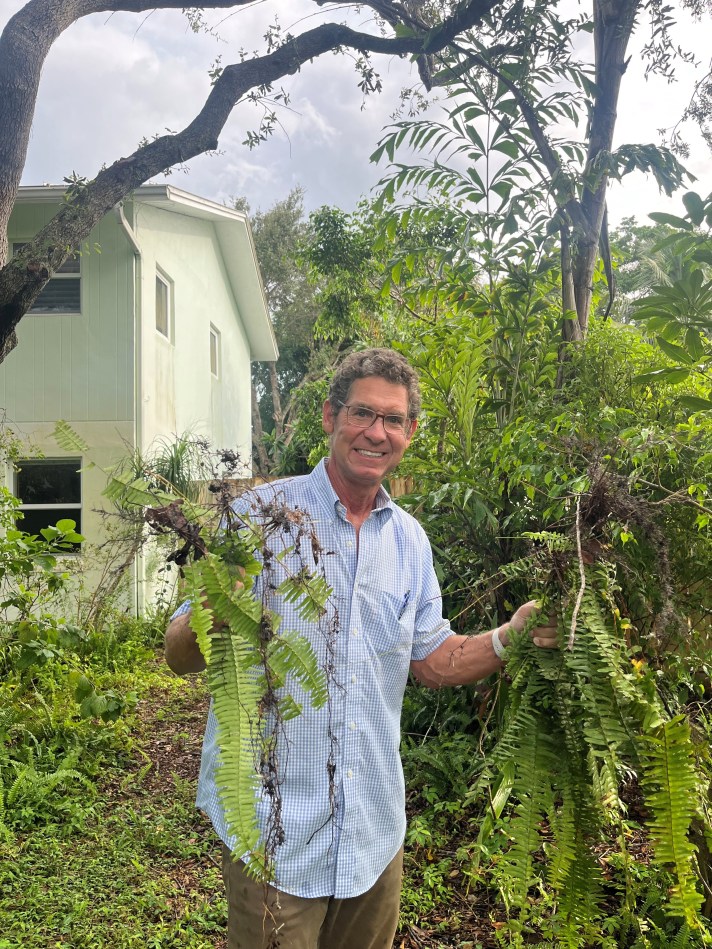
My wife and I have this running argument—nothing too-too serious as far as domestic disputes go. It involves a plant. A fern, specifically. A non-native, invasive variety called the tuberous sword fern. This fern was growing in dense thickets on our modest property when we bought the house some fifteen years ago. It enjoys growing here, we soon discovered. Oh boy, does it enjoy it! Within weeks, I noticed how these ferns had expanded their already ample territory to crowd out other flowers and shrubs. As you might have gleaned already, I’m not a big fan of the tuberous sword fern. My wife, Wendy, well, she feels differently. I’ll be on my knees in our front garden ripping out ferny fistfuls and hear Wendy holler at me from the driveway to leave them alone. That the two of us—who agree so wholeheartedly on matters of international affairs, domestic politics, and even child-rearing—are so at odds over this stupid plant (my words) fascinates me as much as it frustrates me. It’s made me consider more deliberately than I otherwise would how I, and, and by extension, we, ascribe value to plants.
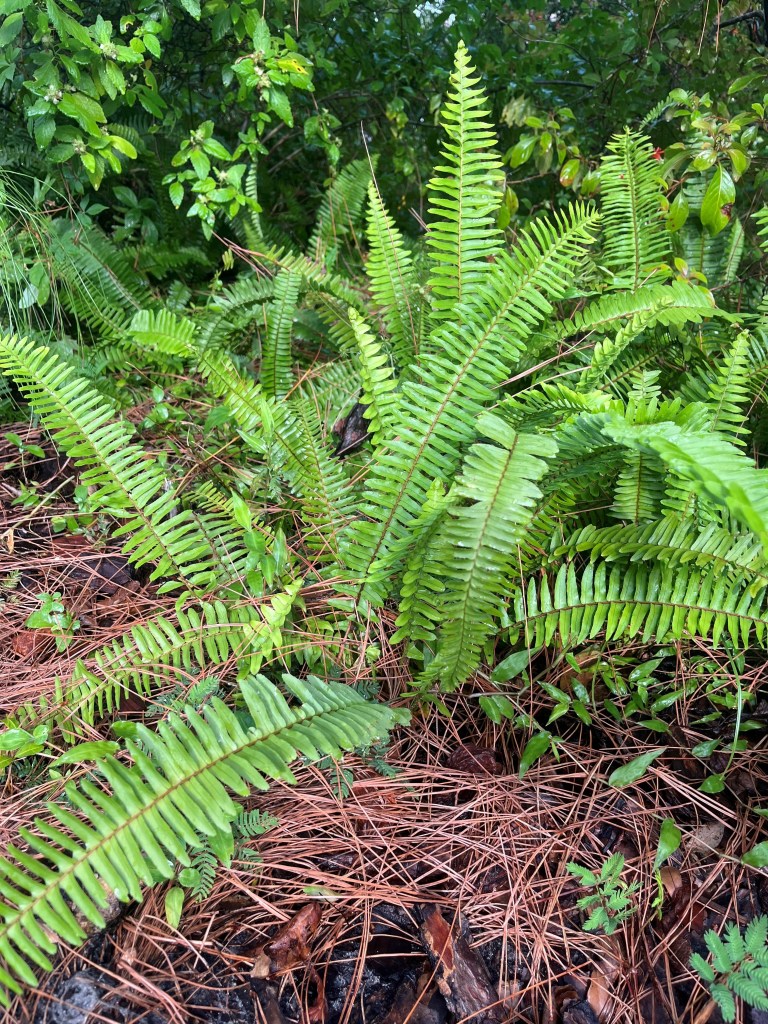
Local citizenship rights have a lot to do with how members of our various native plant societies privilege one plant over the other when it comes to making their landscaping decisions. Native plant enthusiasts are the Puritans among plant lovers. Plants are divided between good (native) and evil (non-native), at least among the most strident of this cohort. Reader, up until recently, I counted myself among this group. The nice thing about being a member of this club is that it’s so simple to distinguish between good plants and evil plants. It’s easy for native plant enthusiasts, to see the non-native tuberous sword fern as evil as it infringes so egregiously upon the home turf of native plants, embattled as ever in our overdeveloped region of South Florida. Yet Wendy clearly operates under a different value-system vis-à-vis plants. When I press her to defend her stance on invasive tuberous sword ferns (and I press her a lot) she claims that while they might crowd out certain other plants, they also perform a valuable function in keeping “weeds” away. This is where I usually chime in, “They are a weed!” But they’re not a “weed” to her. She likes the look of them. The hilly little green mounds the individual plants form across a patch of ground. The complicated geometries of their ferny leaves. Beauty, that is, and utility (they smother less beautiful weeds) are values that Wendy privileges over a plant’s native bona fides. What’s more, some people—though not my wife—hold plants in greater esteem precisely because they’re non-native, or “exotic,” the word preferred by lovers of such plants.
As I’ve suggested, I’m not quite the zealot I once was when it comes to a plant’s native credentials, partly on account of my wife’s different way of seeing plants and partly on account of other experiences with people and plants over the years. More than one native plant enthusiast has visited my yard and scoffed at the few non-native firebush shrubs that I (accidentally) purchased years ago and planted in my yard. I considered ripping them out when their exotic origins were first called to my attention. Yet I hesitated because their leaves are darker and glossier than the leaves on my native firebush shrubs and their flowers are a different shade of orange (beauty, see?), while the hummingbirds and butterflies seem to relish the nectar on the non-native shrubs at least equally to my native firebush. The benefits a plant offers to local wildlife definitely matter to me when I consider its value, irrespective of its geographic origins. Plus, who likes to be scoffed at?
Even so, I felt a pang of guilt about keeping these non-native shrubs—until I visited a native plant nursery way out in the scruffy western part of my county for the first time and noticed mature mango trees (non-native to Florida) mixed in with all the younger native trees and shrubs on sale. When I asked the nursery owner, as unjudgmentally as I could, why he cultivated non-native mango trees on his property, he looked up at the big tree I was gazing at and explained, quite simply, that he and his wife liked the taste of the fruit. Not much you can say to that!
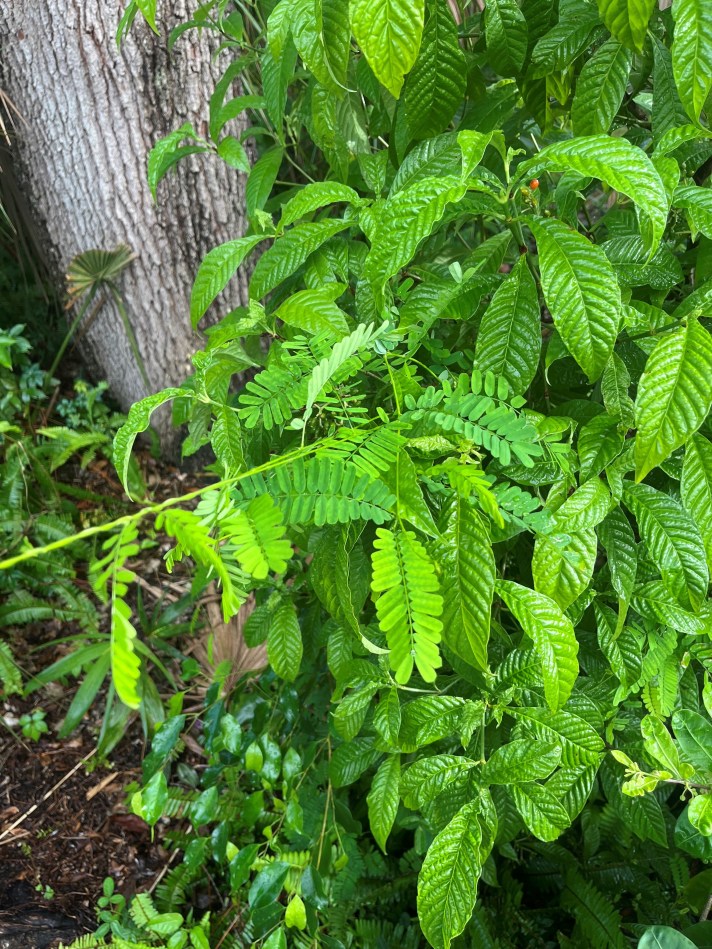
Meanwhile, a new plant has sprung up in our yard, which has defused some of the marital tension in the Furman abode over the tuberous sword fern. Because Wendy and I both agree that this new plant is absolutely an evil plant. It’s called rosary pea, apparently. Non-native and considered invasive. A slender vine with frilly, pinnate leaves that wend their way with terrific speed up the trunks, branches, and stems of our Jamaican caper, stopper, wild coffee, bitterbush, firebush, Bahama strongbark, and any other shrub or tree it manages to latch onto. Its pale green foliage shrouds these plants from all light within weeks if left unchecked, making the tuberous sword fern seem tame by comparison. Wendy and I spend an inordinate amount of time these days side-by-side with plastic buckets unwinding sticky spirals of rosary pea stems from the branches of other plants, yanking them out of the ground by their impossibly stubborn roots. Sometimes, sure, I’ll surreptitiously pluck a pesky tuberous sword fern from the ground and hide it beneath the rosary pea foliage in my bucket. I’m sneaky about it, but the truth is I still don’t like the tuberous sword fern.
Plants are native. Plants are exotic. Plants are rare. Plants are pretty. Plants produce flowers and fruit. Plants ooze toxic juices. Plants provide food and cover and nesting sites to animals. Plants have thorns. Plants provide shade from the blazing sun. Plants shade other plants to death. Plants are lush with foliage. Plants are messy. Plants are fragrant. Plants stink. Why do you love the plants that you love? Why do you hate the plants that you hate? What does all this say about you?
Andrew Furman is professor of English at Florida Atlantic University and teaches in its MFA program in creative writing. His many books include Jewfish, Goldens Are Here, and Bitten: My Unexpected Love Affair with Florida.

 The Florida Bookshelf