
Use code NAHM23 for discount prices through November 30.

Indigenizing Archaeology: Putting Theory into Practice
Edited by Emily C. Van Alst and Carlton Shield Chief Gover
This book highlights early-career Indigenous scholars conducting research in North America who are advancing the growing paradigm of archaeological study done with, by, and for members of Native-descendant communities. Expanding on the foundational works of previous scholars, this volume includes examples of Indigenous methodologies and illustrates different approaches for applying theory in various research scenarios.
Available in February 2024. This book will also be available in an open access digital edition.

We Will Always Be Here: Native Peoples on Living and Thriving in the South
Edited by Denise E. Bates
In We Will Always Be Here, contemporary tribal leaders, educators, and activists speak about their own experiences fighting for Indian identity, self-determination, cultural survival, and community development. This valuable collection describes the lives and priorities of today’s southern Native peoples in their own words.
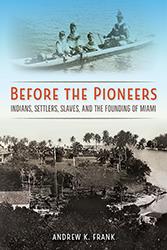
Before the Pioneers: Indians, Settlers, Slaves, and the Founding of Miami
Andrew K. Frank
Formed seemingly out of steel, glass, and concrete, with millions of residents from around the globe, Miami has ancient roots that can be hard to imagine today. Before the Pioneers takes readers into the stories of the people who shaped the land along the Miami River long before most modern histories of the city begin.

Unconquered People: Florida’s Seminole and Miccosukee Indians
Brent Richards Weisman
Brent Weisman approaches Seminole and Miccosukee culture through information provided by archaeology, ethnography, historical documents, and the words of Seminole people themselves. He traces when and how their cultures formed, how they withstood historical challenges, and how they are grappling with the challenges of today.

The Black Seminoles: History of a Freedom-Seeking People
Kenneth W. Porter
Edited by Alcione M. Amos and Thomas P. Senter
Whether as escaped slaves joining Florida’s Seminole Indians in the early 1800s, after their forced removal to Oklahoma, or as border troops and scouts along the Texas-Mexico border, the Black Seminoles fought for freedom, dignity, and agency. Kenneth Porter’s interviews with Chief John Horse’s descendants and research from Alcione Amos and Thomas Senter combine to tell this story of a remarkable people.

Healing Plants: Medicine of the Florida Seminole Indians
Alice Micco Snow and Susan Enns Stans
The first published record of Florida Seminole herbal medicine and ancient healing practices, Healing Plants is a richly illustrated compendium of ethnomedical knowledge and practices passed down orally to Alice Snow through generations of her ancestors. This book provides Seminoles a handbook of plants and offers medical professionals, herbalists, and the general public an understanding of the world of Seminole medicine.

We Come for Good: Archaeology and Tribal Historic Preservation at the Seminole Tribe of Florida
Edited by Paul N. Backhouse, Brent R. Weisman, and Mary Beth Rosebrough
We Come for Good describes the development and operations of the Tribal Historic Preservation Office (THPO) of the Seminole Tribe of Florida. With Native voices front and center, this book demonstrates ways THPOs can work within federal and tribal governments to build capacity and uphold tribal values.

The Timucuan Chiefdoms of Spanish Florida: Volume I: Assimilation
John E. Worth
This two-volume work studies the assimilation and eventual destruction of the Timucuan societies of interior Spanish Florida near St. Augustine, shedding new light on the nature and function of La Florida’s entire mission system.
Volume I traces the effects of European exploration and colonization in the late 1500s through the Timucuan rebellion of 1654.

The Timucuan Chiefdoms of Spanish Florida: Volume II: Resistance and Destruction
John E. Worth
Volume II explores how colonization changed Timucuan settlements into a chain of way-stations between St. Augustine and the Apalachee province, describes rampant demographic collapse in the missions, and looks to English raids and the end of the mission era.

A Struggle for Heritage: Archaeology and Civil Rights in a Long Island Community
Christopher N. Matthews
Based on ten years of collaborative, community-based research, this book examines race and racism in a mixed-heritage Native American and African American community on Long Island’s north shore. Christopher Matthews explores how the families who lived here struggled to survive and preserve their culture over the course of more than 200 years.

Historical Archaeology and Indigenous Collaboration: Discovering Histories That Have Futures
D. Rae Gould, Holly Herbster, Heather Law Pezzarossi, and Stephen A. Mrozowski
Highlighting the strong relationship between New England’s Nipmuc people and their land from the pre-contact period to the present day, this book is the rich result of a twenty-year collaboration between Indigenous and nonindigenous authors, who use their own example to argue that Native peoples need to be integral to any research project focused on Indigenous history and culture.
Winner of the Society for American Archaeology Scholarly Book Award
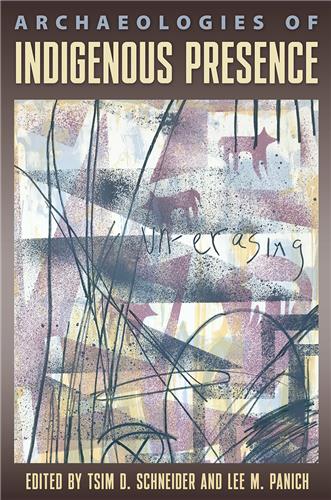
Archaeologies of Indigenous Presence
Edited by Tsim D. Schneider and Lee M. Panich
Challenging narratives of Indigenous cultural loss and disappearance that are still prevalent in the archaeological study of colonization, this book highlights collaborative research and efforts to center the enduring histories of Native peoples in North America through case studies from several regions across the continent.
View all books in our sale here and use code NAHM23 for discount prices through November 30.

 The Florida Bookshelf