
The University of Florida Press announces Marin A. Pilloud has joined Clark Spencer Larsen as coeditor of the series Bioarchaeological Interpretations of the Human Past: Local, Regional, and Global Perspectives. Books in this longstanding series highlight issues such as biocultural responses to stress, health, lifestyle and behavioral adaptation, biomechanical function and adaptive shifts in human history, dietary reconstruction and foodways, biodistance and population history, warfare and conflict, demography, social inequality, and environmental impacts on population. Authors and editors emphasize integrative, interdisciplinary analysis of the links between biology and culture in past societies and the range of cultural, social, and economic conditions and circumstances that have shaped the human experience. Continue reading for our Q&A with both series editors.
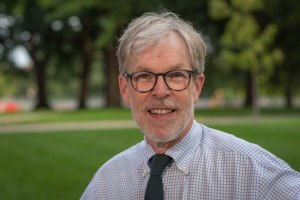
The series was founded in 2006 by Clark Spencer Larsen. Clark, can you talk a bit about how the series began and how it has grown since it started?
In the early 1990s, there was a surge of publications including research results, new methods, and meeting presentations in bioarchaeology, the study of human remains from archaeological contexts. At the time, the opportunity to introduce a book series dedicated to advances and research in bioarchaeology was discussed with the Press. The immediate conclusion drawn by myself and the Press that such a series would provide a valuable addition to the dissemination of research results pertaining to a plethora of settings and topics worldwide. The interest in the book series and the subject matter within was immediate and continues to the present day. Moreover, the topic provides the context for health and behavior in the world we live in today.
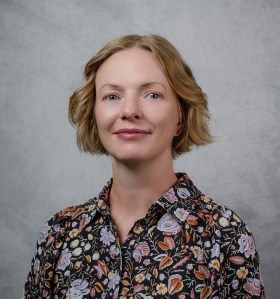
Marin A. Pilloud joined Clark as coeditor in 2023. Marin, can you share some of your background in bioarchaeology?
When I finished my bachelor’s degree in anthropology in 1999, I worked as a contract archaeologist for several years. During this time, I had the opportunity to work on multiple cemetery projects and to learn skeletal analysis methods. I knew researching the human skeleton was where I wanted to continue my studies. I later completed my graduate degrees in biological anthropology at The Ohio State University working with Dr. Larsen. While in graduate school, I had the opportunity to join Clark for fieldwork at the archaeological site of Çatalhöyük, which later served as the focus of my dissertation. I have ongoing bioarchaeological research projects throughout Anatolia and extending into North America. I am also a board-certified forensic anthropologist and consult on casework and have research interests in this area as well.
Clark and Marin, can you tell us how you see the series developing moving forward?
Owing to the strong and growing interest in bioarchaeology, the series has momentum going forward. The series has engaged mostly US and western European bioarchaeologists. Our experience tells us that the future of research publication looks strong in other regions of the world as well, and we are particularly interested in research with a focus on the Global South. The remarkable development of new approaches in genomics pertaining to infectious disease, population origins and migration, pathogens, violence and warfare, social inequality and its origins, demographic patterns, mobility and kinship, climate change, and long-term patterns of adaptation and adjustment are pushing the field forward at a rapid pace. We predict that new areas will develop (e.g., proteomics) in response to these advances. We are also particularly interested in the growing dialogue on the ethics of the study of human remains as well as the professionalization of bioarchaeology, and see these as areas of future growth in the discipline.
What do you look for in a book proposal?
Prospective authors should contact either or both editors (Larsen.53@osu.edu, MPilloud@unr.edu) regarding proposed topics and content. We are interested in either edited volumes or authored books, but key will be to have a paragraph or two outlining a book idea when making the initial contact with the editors. We particularly encourage book projects that develop from meetings sessions (e.g., American Association of Biological Anthropologists, Paleopathology Association, British Association of Biological Anthropologists), dissertation projects, leadership of collaborative research groups, and/or individual members of those groups.
Clark and Marin will be attending the AABA meeting in Los Angeles at the end of March. Prospective authors are encouraged to contact the series editors to discuss book projects.
Recent Books in the Bioarchaeological Interpretations of the Human Past Series

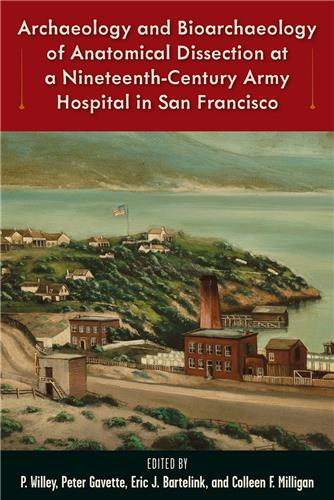
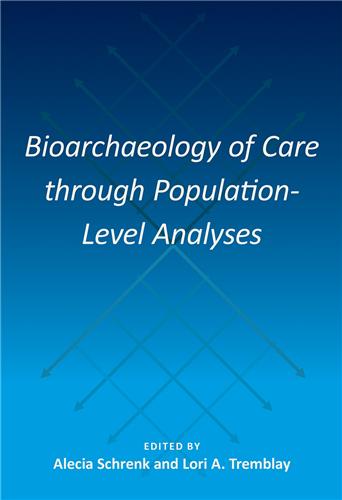
Shop books in the Bioarchaeological Interpretations of the Human Past series and other bioarchaeology titles here. Use code AABA24 for discounts and free shipping in the US for orders over $75.
Clark Spenser Larsen is the founding editor of the Bioarchaeological Interpretations of the Human Past series, and he is Distinguished University Professor in the Department of Anthropology at The Ohio State University.
Marin Pilloud is coeditor of the Bioarchaeological Interpretations of the Human Past series, and she is associate professor of anthropology at the University of Nevada, Reno.

 The Florida Bookshelf