
The following books are now available in paperback editions.

Dream State: Eight Generations of Swamp Lawyers, Conquistadors, Confederate Daughters, Banana Republicans, and Other Florida Wildlife
Diane Roberts
With a New Preface
“With hurricane-force prose, journalist and Florida native Roberts hits the land of orange groves, theme parks and mobile homes with a torrential outpouring of love and hate, affection and disgust . . . If there ever was any doubt about the true nature of the Sunshine State—’where what people think happened is always more important than what really happened’—Roberts puts it to the test in this splendid unofficial history.”—Publishers Weekly
“A fun ride. . . and proof positive that despite its pretenses, Florida does have a history—and a wild one.”—Booklist
“A raucous but also sensitive and insightful view of why the Sunshine State really is different.”—Kirkus Reviews

Tampa Cigar Workers: A Pictorial History
Robert P. Ingalls and Louis A. Pérez, Jr.
Florida Historical Society Harry T. and Harriette V. Moore Award
“Tampa cigar workers were people of such strength and vision that their influence on Tampa endures to this day. Read Tampa Cigar Workers to understand why so many native Tampa residents are proud to say they are the descendants of laborers who spent their days handling tobacco leaves—and building a better life for their families and the city.”—Tampa Tribune
“The various images that fill the book and the timely quotes from contemporary sources and reminiscences that bolster these images make this collection a true treasure.”—Florida Historical Quarterly

Florida’s Space Coast: The Impact of NASA on the Sunshine State
William Barnaby Faherty, S.J.
A volume in the Florida History and Culture series
“An important, interesting study of the relations between the Kennedy Space Center and the communities of Brevard County, Florida.”—Roger D. Launius, former chief historian, NASA, Washington, D.C.
“Packed with fascinating insights about that special time and place and how it changed the lives of everyone in America.”—H-Net

Florida’s Peace River Frontier
Canter Brown, Jr.
“A major contribution to Florida history.”—Orlando Sentinel
“A sprawling chronicle of the nineteenth-century American frontier.”—Journal of American History
“An excellent contribution to the growing literature of the state’s local history.”—Journal of Southern History
“Brown . . . combines a homebred love of the Peace River valley with a tenacious work ethic to find new documentation and recast old assumptions about the neglected region. . . . A study that likely will define the Peace River region for decades to come.”—Florida Historical Quarterly

The Enduring Seminoles: From Alligator Wrestling to Casino Gaming
Patsy West
Revised and Expanded Edition
With a New Preface
A volume in the Florida History and Culture series
Florida Historical Society Harry T. and Harriette V. Moore Award
“Deserves a wide audience. . . . It is sophisticated enough for a university seminar but filled with appeal for anyone interested in Native Americans, Florida history or the interaction of tourists and native peoples.”—Tampa Tribune
“Should make some scholars look again at what they thought were the effects of commercial enterprises on the lives of American Indian people in this hemisphere.”—American Indian Quarterly
“Engrossing. . . . West has shown us just how vital tourism has been to the Seminoles and the Miccosukees.”—Ft. Lauderdale Sun-Sentinel
“Packed full of stories and details about Florida tribes and tourism.”—Orlando Sentinel

Show Thyself a Man: Georgia State Troops, Colored, 1865–1905
Gregory Mixon
A volume in the series Southern Dissent
Georgia Historical Records Advisory Council Award for Excellence in Research Using the Holdings of Archives
“Mixon’s research into this critical aspect of postbellum life is impeccable and represents a significant contribution to the study of African American military history. . . . A tremendously valuable study.”—Civil War Book Review
“Expands our understanding of African American agency during Georgia’s post-Civil War era. . . . Breaks new ground by underscoring the important interplay between race and civilian military power during Reconstruction.” —Journal of Southern History

When Tobacco Was King: Families, Farm Labor, and Federal Policy in the Piedmont
Evan P. Bennett
“Weaves agricultural, social, and political history into a thorough and compelling history of the Bright Belt tobacco region. . . . Highly recommended.”—Choice
“An important addition to our understanding of the shaping of tobacco agriculture, especially in the context of government farm programs.”—Journal of Southern History
“A clear, concise roadmap through the complexities of post–Civil War tobacco life and policy. . . . Captures the opportunities and challenges of southern agriculture as it moved into the modern age.”—Agricultural History
“A solidly researched and well-documented study of one tobacco region from the 1860s through the early 2000s, and, as such, will be useful to many scholars of agriculture and the South.”—AAG Review of Books
“A concise study of families, farm labor, and federal policy in the Old Bright Belt region of North Carolina and Virginia. Bennett provides historical context for tobacco’s past and future.”—North Carolina Historical Review

The Letters of George Long Brown: A Yankee Merchant on Florida’s Antebellum Frontier
Edited by James M. Denham and Keith L. Huneycutt
A volume in the series Contested Boundaries
“A solid collection of letters that illuminates how a northerner carved out for himself a home and a life in antebellum North Florida. Anyone interested in commercial and social life in the antebellum US, and Florida in particular, would do well to read this volume.”—H-Net
“Brown’s letters provide an excellent window onto a wide variety of topics beyond his Florida community and his mercantile activities.”—Journal of American History
“An insightful work on the Brown family and antebellum Florida. . . . The book would be welcomed by historians interested in northerners living in the antebellum South and those curious about early Florida state history.”—Journal of Southern History
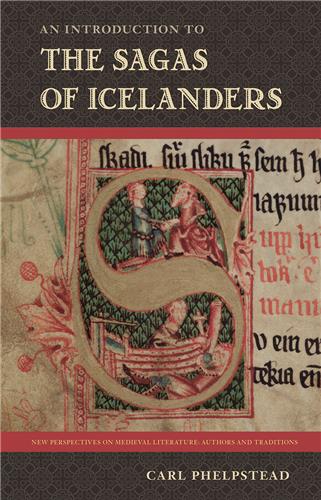
An Introduction to the Sagas of Icelanders
Carl Phelpstead
A volume in the series New Perspectives on Medieval Literature: Authors and Traditions
“This well-written work expands understanding of Icelandic sagas in an accessible, entertaining, and thought-provoking way. . . . Phelpstead’s insightful approach to the sagas’ themes and complexities opens them up to the modern reader and the literary world.”—Choice
“Offers an expansive yet grounded introduction to the sagas and is a great academic resource for researchers and students.”—Forum for Modern Language Studies
“Refreshingly clear, engaging, and unpretentious. . . . Will aid and stimulate students of the sagas and others, providing many excellent starting points for discussion and further analysis.”—Scandinavian Studies

Historical Archaeology and Indigenous Collaboration: Discovering Histories That Have Futures
D. Rae Gould, Holly Herbster, Heather Law Pezzarossi, and Stephen A. Mrozowski
Society for American Archaeology Scholarly Book Award
“Excellent. . . . Based on archival research, oral history, and archaeological excavation and analyses of three sites centered around the Nipmuc people in southern New England, the text . . . tell[s] the stories of both the historical events and the work to understand them.”—Choice
“Using multidisciplinary approaches to documents, oral accounts, material remains, and cultural landscapes . . . from a Native perspective, the authors braid together a cohesive understanding of a Nipmuc presence in their traditional homelands. . . . A history that does more than reveal the past: it paves the way for the future.”—American Antiquity
“A rich and humanistic story of Nipmuc continuance in New England since the 1600s. . . . Offers an in-depth account of silenced regional histories in the heart of the American empire and gestures towards futurity as a major theoretical intervention for collaborative and decolonizing archaeologies.”—Historical Archaeology
“Should be read by all archaeologists . . . because it lays out how archaeologists can, and should, build long-term collaborative relationships with Indigenous communities . . . It is a model for decolonizing archaeology. Archaeology needs this book.”—American Indian Culture and Research Journal

Dogs: Archaeology Beyond Domestication
Edited by Brandi Bethke and Amanda Burtt
“A cutting-edge collection. . . . Embraces the intersecting interests of archaeology, animal studies, ethnography, and posthumanism.”—Choice
“Both a useful guide to the techniques and inferences that archaeologists use to piece together the economic value and cultural importance of animals in past societies and a striking illustration of the qualitative and functional diversity of the dog-human partnership across cultures and over time. . . . A valuable resource for anyone interested in dogs and their past relations with humans.”—Journal of Anthropological Research

Bears: Archaeological and Ethnohistorical Perspectives in Native Eastern North America
Edited by Heather A. Lapham and Gregory A. Waselkov
A volume in the Florida Museum of Natural History: Ripley P. Bullen Series
“Now, everything you wanted to know about bears, from archaeological and ethnohistorical perspectives in eastern North America and beyond, can be found in one exceptional, high-quality package.”—American Antiquity
“This volume is a welcome addition to any zooarchaeologist’s library but has much to offer beyond that. The focus may be on bears, but the research presented demonstrates the significant results that can be obtained through detailed study of archaeological resources that expand our understanding of human-animal interactions.”—Midcontinental Journal of Archaeology
“A compelling collection of essays and perspectives that shed light on what is a fascinating and underappreciated topic. . . . Well worth integrating into any research about humans, animals, foodways, and ecologies of eastern North America in the precontact and colonial periods.” —H-Net
“[Contains] a lot of information ranging from ethnohistorical accounts and ethnographic interviews to details on the archaeological contexts in which bears have been found regionally. . . . Anyone with an interest in bears will find much that is intriguing in this volume.”—Pennsylvania Archaeologist

Investigating the Ordinary: Everyday Matters in Southeast Archaeology
Edited by Sarah E. Price and Philip J. Carr
A volume in the Florida Museum of Natural History: Ripley P. Bullen Series
“A phenomenal collection of case studies written by prominent southeastern archaeologists which asks thought-provoking questions about the past, and more importantly, offers suggestions for the future of our field.”—North American Archaeologist
“Offer[s] concrete, science/data-driven perspectives on the everyday. . . . The value here centers on challenging archaeologists to explore unfamiliar contexts, ideas, and methodologies from numerous perspectives, a transdisciplinary approach for a twenty-first century public-oriented archaeology.”—Southeastern Archaeology
“Provides theoretical, empirical, and imaginative inspiration. . . . Recommend[ed] for any practitioner interested in pushing the boundaries of inquiry.”—Journal of Anthropological Research
“Addresses critical issues, including how the everyday and the exceptional are fundamentally entangled to produce one another, contributing valuably to a substantive archaeology of everyday matters.”—Journal of the Royal Anthropological Institute
“Convincingly argues that investigating the ordinary does matter in ‘real’ archaeology for many reasons, including formulating research questions, integrating data, collaborative research, and even theory building.”—American Antiquity
“Encourages archaeologists to consider the complexities of everyday life, and to recognize that the practices, animals, and materials that people engage with on a daily basis have important effects in the broader sociocultural context.”—Midcontinental Journal of Archaeology
“Makes a convincing case that the everyday matters in archaeological discourse, and that we, as producers of this discourse, have a responsibility to continue its relevance in today’s world.”—Mississippi Archaeology

Authority, Autonomy, and the Archaeology of a Mississippian Community
Erin S. Nelson
A volume in the Florida Museum of Natural History: Ripley P. Bullen Series
“Provides a compelling, multiscalar analysis that examines how the processes of community formation and maintenance operated at the neighborhood, site, and regional scales, as well within the broader Mississippian world.”—Journal of Anthropological Research
“Presents the results of a well-defined and carefully constructed research project. One major contribution . . . is a methodologically rigorous analysis of ceramics and radiocarbon dates to refine the culture history into two sequential phases. . . A second major contribution is the use of ceramic vessel types and refined analyses of mound construction histories to build interpretations about persistence and variance in feasting and mound-building practices.”—American Antiquity
“An important addition to the understanding of Mississippian communities.”—American Archaeology

Hopewell Settlement Patterns, Subsistence, and Symbolic Landscapes
Edited by A. Martin Byers and DeeAnne Wymer
“This volume should be read by all researchers interested in the Hopewell phenomenon, but the theoretical perspectives and dialogues contained within have implications and applications well beyond the geographic and temporal focus of the book.”—Southeastern Archaeology
“Important to all those who want to understand current directions in Hopewellian studies. Its most intriguing aspect is the sense it gives of scholars at work, debating and refining their ideas and interpretations about the Hopewell world.”—Sarah Ward Neusius, professor emeritus, Indiana University of Pennsylvania

Sherds of History: Domestic Life in Colonial Guadeloupe
Myriam Arcangeli
“A successful study of the incorporation of ceramics into the emerging Creole social system in the French West Indies.”—American Antiquity
“Arcangeli uses her analyses to give insight into social and cultural aspects of the society. . . . Recommended.”—Choice
“An invaluable source for both interpretive insight and comparative reference for domestic ceramic signatures as varied by class, race, occupation, and economy.”—Historical Archaeology
“Sheds new and interesting light on the daily lives of urban households in a Caribbean island during the slavery era. It is an innovative and illuminating example of the use of the methods of historic archaeology to study la vie quotidienne in a colonial society.”—Caribbean Quarterly
“A richly textured and nuanced analysis of life in the French Caribbean colony of Guadeloupe during the eighteenth and early nineteenth centuries from the point of view of ceramic users, rather than from the perspective of producers, in the context of daily use.” —Cambridge Archaeological Journal
“Readers gain a strong sense of how ceramics were used in everyday eighteenth- and nineteenth-century life and work, often by enslaved domestic workers gathering water, setting tables, cooking food and promoting bodily health.”—Antiquity
“Provides scholars with a trove of insights into the variety of Guadeloupe’s ceramic-related practices . . . and their similarities and differences across class and race divides and between colony and metropole that will resonate for ceramic analyses, future studies of Guadeloupe, and broader comparative analyses of colonial contexts across the globe.”—American Anthropologist

Dressing the Part: Power, Dress, Gender, and Representation in the Pre-Columbian Americas
Edited by Sarahh E. M. Scher and Billie J. A. Follensbee
“Focuses on how costume across precontact North, Central, and South America conveyed information about gender, power, and the relationship between the two. . . . A welcome addition.”—Choice
“Pursuing a more holistic understanding of gender in different cultures of the Americas, the authors of the volume explore how complex gender relationships and identities are both manifested in social relations and constituted by them. The studies also demonstrate the fluidity of gender and its manifestations, revealing how gender and associated costumes relate to or are appropriated by relationships of power.”—Latin American Research Review
“Proves that painstaking looking, combined with careful comparison and contrasting of art forms . . . can indeed shed light on the interrelationships of gender, power, and change in undocumented and previously misunderstood pasts.” —Latin American Antiquity
“Drawing from history, anthropology, ethnography, and material culture studies, the authors in the volume explore how gendered identities are part of the greater fabric of social relations, political power, and religious authority.”—Ethnohistory
“This volume brings new insight through its detailed analyses of case studies that span regions throughout the Americas.”—The Americas
“Essential reading that not only brings fresh insights and highlights dynamism, fluidity, and contentiousness in the relationships between gender and power in ancient American societies, but also serves as a solid basis for further investigation.”—caa.reviews

 The Florida Bookshelf