
The following books are now available in paperback editions.

The First Hollywood: Florida and the Golden Age of Silent Filmmaking
Shawn C. Bean
Florida Book Awards, Gold Medal for Florida Nonfiction
“Explores the burst of Florida film production that occurred at the dawn of the cinema, much of it in the Jacksonville area. . . . Bean is a lively writer.”—Orlando Magazine
“A richly researched and entertaining look at the days when film crews ran amok through Jacksonville’s streets.”—Florida Times-Union
“Full of Hollywood-style drama.”—Tampa Bay Magazine
“Very well written. . . . Brings together a great deal of important and interesting information.”—Tampa Bay History
“An important source on this neglected period of cinema history.”—Journal of Southern History

Seagull One: The Amazing True Story of Brothers to the Rescue
Lily Prellezo in collaboration with José Basulto
“Basulto, along with Prellezo, tells the well-executed, often harrowing true story of how he and co-founder Schuss daringly took humanitarian efforts into their own hands and transformed the lives of thousands of Cuban refugees.”—Publishers Weekly
“A wonderful achievement and contribution to our understanding of a unique chapter in the Cuban Exile experience. . . . It is a story of tragedy and triumph, brotherhood, sisterhood, and betrayal. A must read.”—NBC Miami

Sugar Baron: Manuel Rionda and the Fortunes of Pre-Castro Cuba
Muriel McAvoy
Choice Outstanding Academic Title
“This excellent book recounts the fascinating career of Rionda, a Spanish immigrant to Cuba who later moved to the US and became one of the most important sugar brokers in the world. . . . A major contribution to US as well as Cuban history. . . . Highly recommended.”—Choice
“A wonderfully detailed study written with care and judiciousness. . . . An essential book for anyone working on modern Cuban history and modern business history.”—Journal of Latin American Studies
“Excellent. . . . Does a good job on a very complicated subject.”—Latin American Research Review
“A fascinating portrait of a dynamic entrepreneur whose experiences illuminate the evolving international sugar industry and the Cuban-U.S. economic relations before the Revolution.”—New West Indian Guide
“McAvoy’s detailed biography of Manuel Rionda’s domination of the Cuban sugar industry through his stewardship of the largest sugar company on the island known as the Cuban Cane Sugar Corporation fills a large void in the historical scholarship.”—Florida Historical Quarterly
“In this well-crafted, fast-paced biographical narrative, Muriel McAvoy offers an inside look into the life of one of Cuba’s great modernizing commercial and industrial pioneers.”—Business History Review
“McAvoy’s well-written book allows us to know with considerable precision the framework of business and financial relations involved in both the transformation and modernization of the Cuban sugar industry at the end of the nineteenth century and the opening of the business to financial capital in the twentieth century.”—Journal of Economic History
“A well-told narrative of people and finances. . . . Provides us with a very complex portrait of Cuba, the United States, and the world of sugar in the late nineteenth and early twentieth centuries.”—Enterprise & Society

From Rights to Economics: The Ongoing Struggle for Black Equality in the U.S. South
Timothy J. Minchin
“Minchin’s gripping stories are engaging and offer an important contribution to a growing body of scholarship.”—Journal of American History
“Especially important in highlighting the crucial intersection between Black activism and federal policy and intervention; the nature and extent of continuing white supremacy and Black protest; and the evolving positions taken by the federal government in the battle over entrenched racial discrimination.”—Journal of Southern History
“Shows how the success of the civil rights movement was the essential inspiration that energized new strategies and renewed commitments to campaign for African American economic equality. . . . Chronicle[s] the voices of African American workers and the union, community, religious, and political leaders struggling for economic justice in a new era of American history.”—Labor Studies Journal
“Covers new ground and forces us to reevaluate how the movements transpired after the mid-1960s. . . . An important and valuable work for civil rights and labor scholars.”—Journal of American Ethnic History
“[Shows] that southern Black economic progress after 1965 required ongoing struggle through political pressure, publicity, negotiation and litigation in order to realize the potential of the Civil Rights Act.”—Southern Quarterly
“Successfully sheds light on both the unique strategies activists used to expand Black economic opportunity . . . as well as significant, however overlooked, episodes in the ongoing civil rights era.”—Florida Historical Quarterly
“The great benefit of this book is its illumination in one volume of some of the complexities of the continuing struggle for civil rights after 1965.”—North Carolina Historical Review
“Successfully sheds light on both the unique strategies activists used to expand Black economic opportunity . . . as well as significant, however overlooked, episodes in the ongoing Civil Rights Era.”—Florida Historical Quarterly
“The great benefit of this book is its illumination in one volume of some of the complexities of the continuing struggle for civil rights after 1965.”—North Carolina Historical Review

Zora Neale Hurston and American Literary Culture
M. Genevieve West
“Heretofore, understanding of Hurston’s reputation and reception has been based primarily on opinion. This important volume supplants opinion with substantive, detailed facts. . . . Highly recommended.”—Choice
“A unique contribution to Hurston scholarship, this volume is the first to focus on the reception and marketing history of the tumultuous career and legacy of the widely known Harlem Renaissance author who fell into virtual obscurity until her reclamation in the 1970s.”—American Literature
“West argues persuasively that Hurston’s determination to pursue her own goals as an author conflicted with the expectations for her work among both white and Black readers.”—National Women’s Studies Association Journal
“[An] altogether exemplary study of America’s changing literary climate and its repercussions for the life and the literary status of one writer.”—Southern Literary Journal
Hemingway and Italy: Twenty-First-Century Perspectives
Edited by Mark Cirino and Mark P. Ott
“An indispensable source for anyone seeking wider knowledge of twenty-first-century Hemingway research, particularly with respect to his works set in Italy.”—Modern Language Review
“An accessible introduction to Hemingway and Italy. . . . The collection is a pleasure.”—Hemingway Review
“Mark Cirino and Mark P. Ott have put together a collection of essays that showcases a considerable variety of critical approaches, as well as an array of international perspectives and sensibilities, which truly befits Hemingway’s cosmopolitanism. Hemingway and Italy is a welcome addition both to Hemingway studies and to scholarship devoted to the venerable tradition of the international theme, particularly as regards the complex, fruitful relationship between American writers and Italy.”—Modernism/modernity
“This volume beckons us with a truly unique and heretofore unearthed consideration of Hemingway’s Italy by engaging with a wide variety of Hemingway experts, connoisseurs, friends, and acquaintances alike, who deliver a provocative read about Hemingway’s connection with Italy.”—Italian Americana

Making Caribbean Dance: Continuity and Creativity in Island Cultures
Edited by Susanna Sloat
“An indispensable resource that belongs on the bookshelf . . . of any serious student of Caribbean music, dance, and general culture. . . . All of the contributions are useful and informative in their distinct ways.”—Dance Chronicle
“In keeping with the themes of continuity and creativity, essayists reference racial and national groups’ ancestral roots and influences even as they enthusiastically promote and celebrate evolving choreographies, highly individualized performances, newly discovered traditions, and costumes and participants. Highly recommended.”—Choice
“As a compendium of well-described and specific examples of dances that, on the whole, are rarely seen or experienced outside their specific cultural settings, Making Caribbean Dance is an excellent reference source.”—Dance Research Journal

Neo-Authoritarian Masculinity in Brazilian Crime Film
Jeremy Lehnen
A volume in the series Reframing Media, Technology, and Culture in Latin/o America
“Lehnen boldly argues that this particular genre of Brazilian cinema was partially responsible for dictator-in-the-making Jair Bolsonaro. Through a broad overview of Brazilian crime film since cinema novo and deep, nuanced readings of popular and/or acclaimed 21st-century classics . . . Lehnen provides the cinematic evidence to back up his argument. . . . Theoretically dense yet highly readable.”—Choice
“Presents an exquisite analysis of cinematic strategies of Brazilian cinema today, masterfully connecting films to the idea of a constructed hypermasculinity. The book raises important points about Brazil’s current sociopolitical turn to the extreme right.”—Emanuelle K. F. Oliveira-Monte, author of Writing Identity: The Politics of Contemporary Afro-Brazilian Literature
“An ambitious and theoretically sophisticated study. This veritable tour de force promises to be a reference for years to come on Brazilian contemporary film, violence, and masculinities.”—Kathryn Bishop-Sanchez, author of Creating Carmen Miranda: Race, Camp, and Transnational Stardom
“Important and highly original. Through impressive close analyses of cinematic form and techniques in recent mainstream crime films in Brazil, Lehnen demonstrates how cinema can work to actively produce and circulate neo-authoritarian masculinity couched in violence as a dominant discursive social practice.”—Andrew C. Rajca, author of Dissensual Subjects: Memory, Human Rights, and Postdictatorship in Argentina, Brazil, and Uruguay

Afro-Latinx Digital Connections
Edited by Eduard Arriaga and Andrés Villar
A volume in the series Reframing Media, Technology, and Culture in Latin/o America
“Groundbreaking. . . . The first book on the role played by digital technologies in the development of ‘expanded’ conceptions of Blackness in Latin America. . . . An important volume and stimulating springboard for future research.”—Bulletin of Hispanic Studies
“A much needed and important contribution to the recent growth of digital humanities studies focused on Latin America and adds to Black digital humanities by examining the work being done by Afro-Latinx communities both in the US and in Latin America.”—Chiricú Journal: Latina/o Literatures, Arts, and Cultures
“Contributes to the conceptual debate about Afro-Latinx communities, registers and communicates how digital projects have been developed by people who engage in race and gender perspectives, and discusses the interaction of different perspectives in the web of Afro-Latinx connections.”—H-Net

Toward a Global History of Latin America’s Revolutionary Left
Edited by Tanya Harmer and Alberto Martín Álvarez
“[This] volume’s in-depth analysis of Latin America’s revolutionary left and the broad coverage of the many connections and interrelations between Latin American revolutionaries and their counterparts in other areas of the globe will make it a fundamental point of reference for those studying and teaching not only history but also other social disciplines in the region and the world.”—International Affairs
“The different contributions do an excellent job of getting beyond ideological dogmas to paint a detailed and empirically grounded portrait of the period.”—Bulletin of Latin American Research
“Rich and original contributions . . . offer convincing evidence of the diplomatic strength of Latin America’s revolutionary Left, not only in exile and defeat but also in the throes of revolution and war.”—Latin American Research Review
“The contributors’ use of seldom-tapped archives in Beijing, Moscow, Prague, and various Western European sites sets the volume apart from most studies of the Latin American Left.” —Hispanic American Historical Review
“Succeeds in bringing together voices and narratives previously excluded in the studies of the Latin American Left.” —Hispania

Ritual, Discourse, and Community in Cuban Santería: Speaking a Sacred World
Kristina Wirtz
“Wirtz’s lucid and intimate ethnography of Santería practice in Santiago de Cuba addresses classic debates in the study of religions and African-derived cultures in the Americas.. . . . A rewarding, tightly structured read.”—Caribbean Studies
“The reader comes away with a vivid sense of the complexities of the historical emergence of Santería, of the competing agendas of Santería’s ritual experts at this historical moment, of the distillation of relatively stable religious stances through moment-to-moment activities and discourse, and of the intimate interplay between the divine and the all too human.”—Journal of Linguistic Anthropology
“A sympathetic and detailed ethnography of a religious community. . . . A fine book for scholars interested in cultural theory and the construction of religious communities.”—Nova Religio
“Wirtz brings . . . a background in ecology and evolutionary theory that, combined with her expertise in linguistic anthropology, give her descriptions of discursive competition as a path to religious survival a rare prescience and urgency.”—Journal of Anthropological Research
“Wirtz’s attention to the socially constitutive force of reflective discourse and her detailed ethnography suggest new directions for the study of Santería and religion.”—Journal of Latin American and Caribbean Anthropology

The Archaeology of New Netherland: A World Built on Trade
Edited by Craig Lukezic and John P. McCarthy
“A major contribution to the archaeology of the region, with chapters that cover a wide variety of topics—from the mundane (marbles), to the curious (wolf traps), to the magisterial (Fort New Gothenburg and the Printzhof). It should be on the bookshelves of all scholars working in this region.”—American Antiquity
“An in-depth and important new look at the rich culture of Dutch America as revealed through the practice of historical archaeology.”—Charles E. Orser Jr., author of The Archaeology of Race and Racialization in Historic America
“Presenting wide-ranging overviews and case studies, this book fills a huge gap in the historical archaeology of early America and presents fascinating glimpses of the new North American world the Dutch made through trade.”—Mary C. Beaudry, coeditor of The Historical Archaeology of Shadow and Intimate Economies
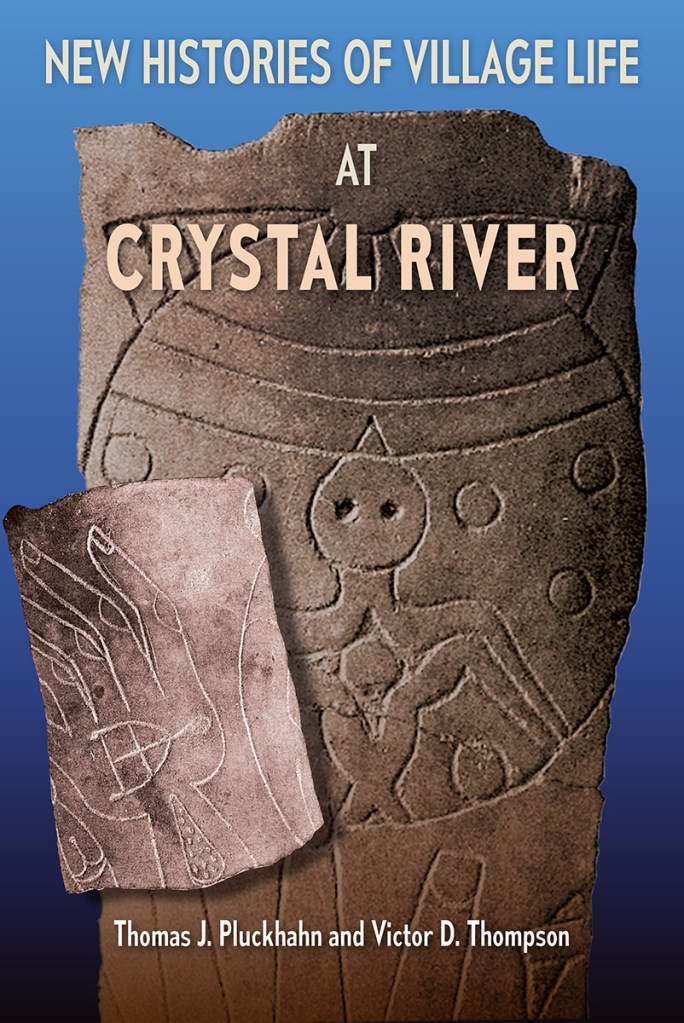
New Histories of Village Life at Crystal River
Thomas J. Pluckhahn and Victor D. Thompson
A volume in the Florida Museum of Natural History: Ripley P. Bullen Series
“This study offers a refreshing new look at Crystal River, an important and well-known site located on the west coast of Florida that was used over a lengthy span.”—American Antiquity
“A valuable addition to southeastern archaeological research. Archaeologists and historians with interests in early village formation and archaeological field methods would benefit from reading this volume.”—H-Net
“Provide[s] a detailed understanding of how [the site] developed over 1,200 years of human utilization and occupation; and demonstrate[s] how the Crystal River/Roberts Island complex represents a model for the transition of prehistoric societies from Archaic hunting and gathering ones to the beginning of village life.”—North American Archaeologist
“Serves as a compelling case study. . . . This book stakes its own claims on how archaeology should be interpreted for understanding present-day environmental and social issues.” —Midcontinental Journal of Archaeology

Bioarchaeology of East Asia: Movement, Contact, Health
Edited by Kate Pechenkina and Marc Oxenham
“Succeeds in providing good coverage of the current state of scientific research on major issues in two broad subject areas in bioarchaeology: (a) population history and interaction, and (b) community health with a focus on diet and disease.”—American Journal of Physical Anthropology
“The range of ecological contexts and subsistence practices, the time depth, and the geographical expanse represented in the book amply demonstrate the important role that studies of Asian prehistory should play in addressing the big questions of human biological history.”—Journal of Anthropological Research
“Extremely useful as a good introduction to the region and as a resource for comparative data for scholars in Asia and the Pacific.”—Journal of Island and Coastal Archaeology
“A welcomed compendium to a large anthropological body of research, which had previously lacked data from this historically and culturally diverse region, covering the areas from the western Inner Asian steppes east to Japan, and from Mongolia in the north, south to the tropical Malay Archipelago.”—Anthropos

 The Florida Bookshelf